
There’s a time of year when everyone in Montecarlo talks about the same thing: not wine, which is now resting in the cellar, but olives. Nets spread under the trees, crates filling up, the trip to the mill, and then that first taste on warm bread, with green oil that tickles the back of your throat. This is olio nuovo, new olive oil, and for those of us who live in the hills of Lucca it’s the true end of the season.
In this story we explain when we harvest our olives, what happens at the mill, how to recognise and taste a good new oil, and how to experience it as a visitor in autumn 2026.
New olive oil is extra virgin oil freshly pressed from olives picked in autumn. In the hills of Lucca the harvest runs from late October to December, and new oil is tasted from November into early winter: green, fruity, with a clear bitterness and pepperiness that soften over the months.
In the Lucca hills olives are picked between late October and late December. That’s also the period set for Lucca PDO extra virgin olive oil, made mainly from the Frantoio and Leccino varieties (Visit Tuscany, Lucca PDO olive oil). Picking early, in late October or early November, gives less oil but a more aromatic, greener one, rich in polyphenols; waiting for riper olives gives higher yields and a softer oil. Every family makes this choice every year, checking the colour of the olives tree by tree.
2026 is a year to remember. The very hot summer brought ripening forward, and in some parts of Tuscany, such as the Val di Cornia, the harvest had already begun in September. The olives are plentiful, healthy and almost free of olive fly damage: “it will be a good harvest, better than last year,” said Paolo Di Gaetano, producer and vice-president of the consortium protecting Tuscan olive oil, while Letizia Cesani, president of Coldiretti Toscana, warned that the cost of fuel, labour and energy may push prices up.
It’s a real change from 2025, when in the Lucca area olive fly attacks in July and August, along with other diseases, made many olives drop early, giving low yields even though quality stayed high.
Here in Montecarlo it went the same way: this year our olive harvest started earlier than usual.
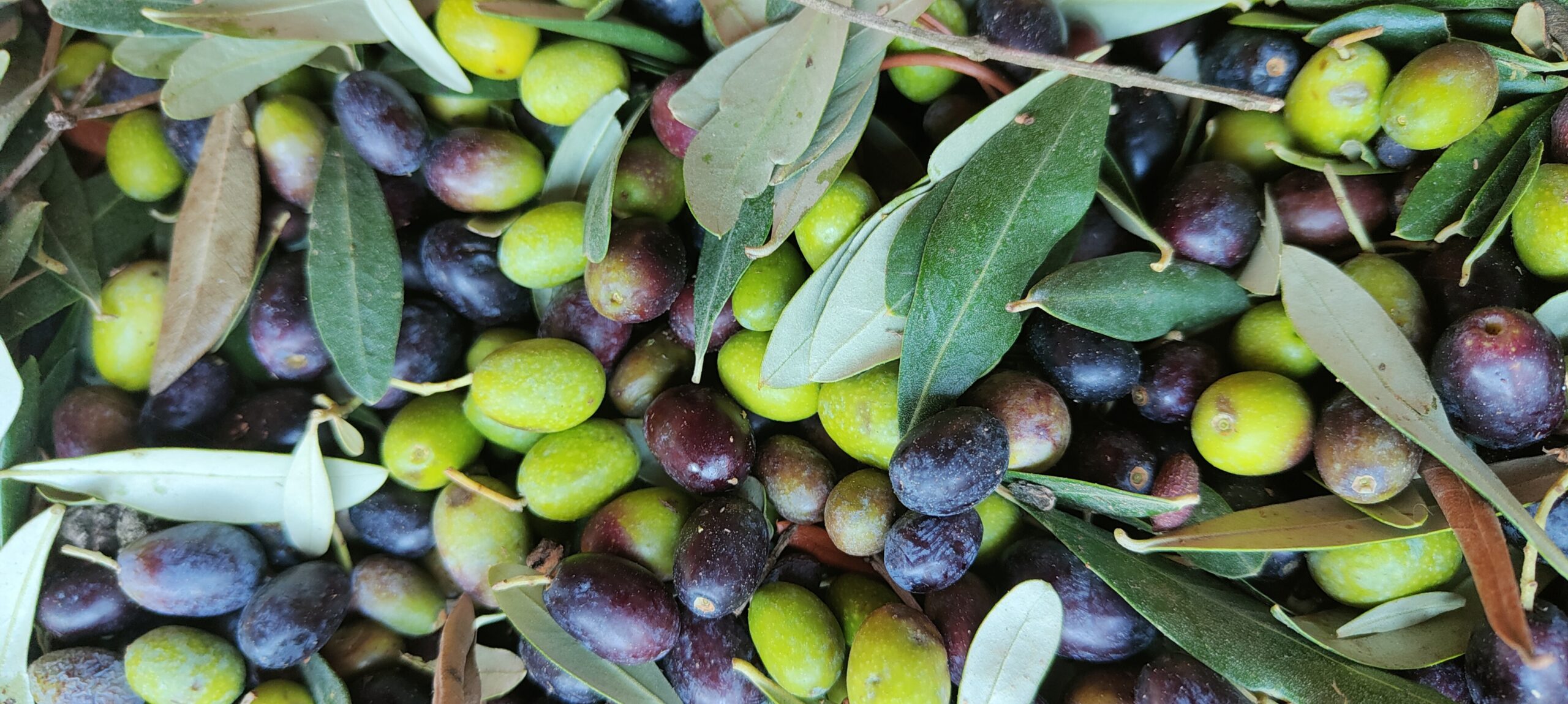
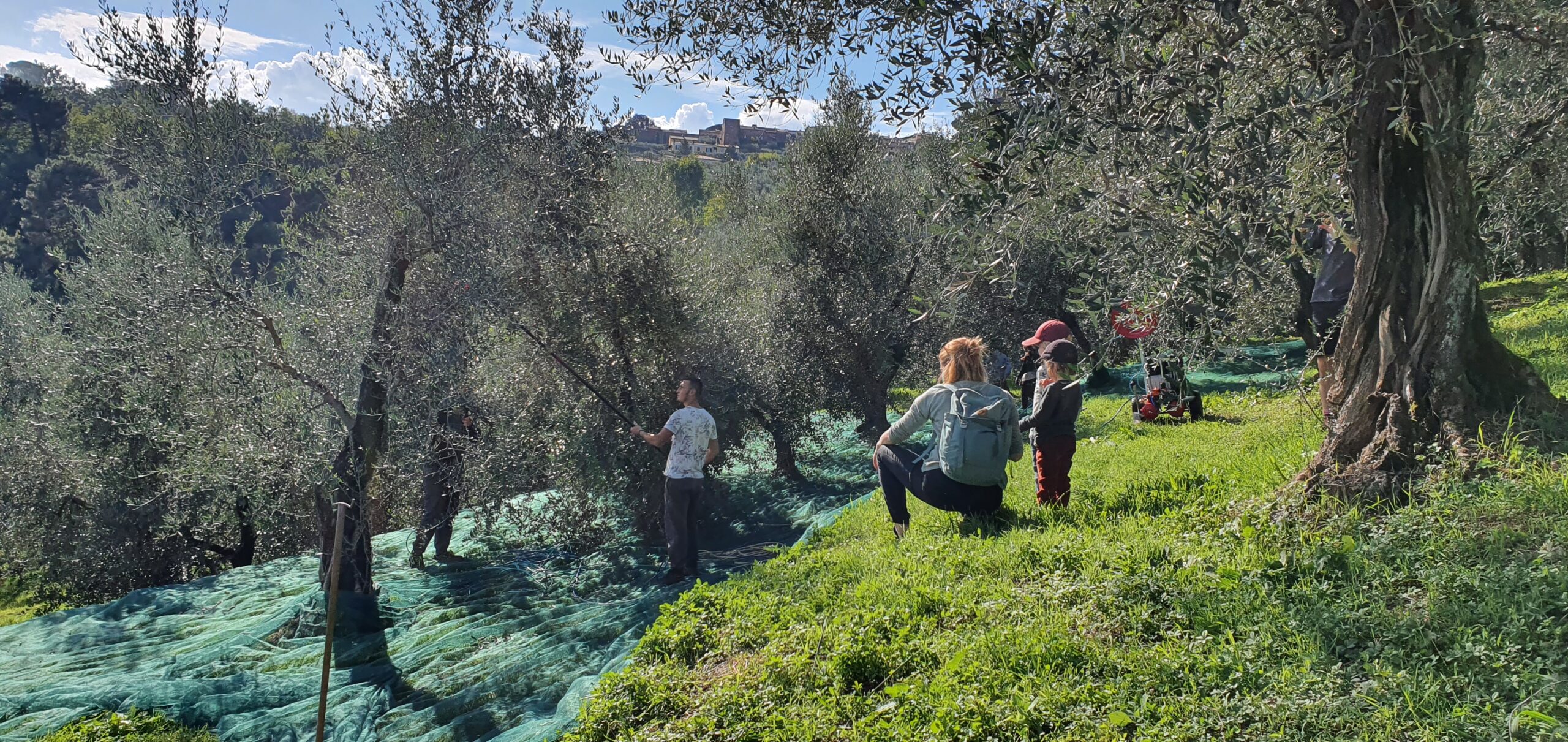
The harvest is teamwork and patience. Nets are spread under each tree, then the olives are removed from the branches: by hand, “combing” them off with the fingers, or with abbacchiatori, electric or pneumatic rakes that gently shake the twigs. The olives that fall onto the nets are gathered into crates, cleaned of leaves and twigs and taken to the mill as soon as possible.
Timing is everything: once picked, an olive starts losing freshness straight away. That’s why olives are pressed within a few hours of picking, never days later. It’s the rule that makes the difference between a lively oil and a flat one.
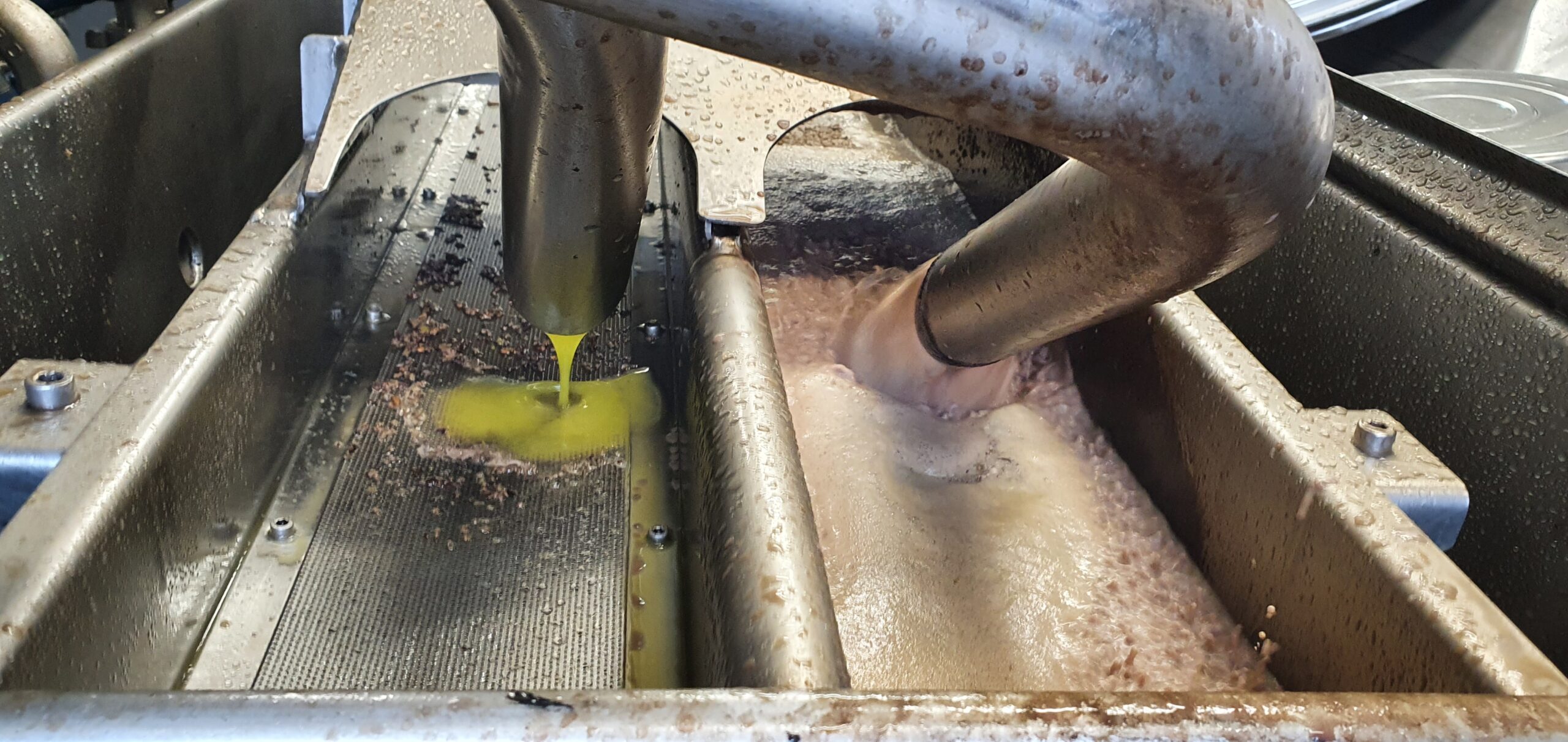
At the mill the olives are first washed and separated from the leaves, then crushed whole, stone included, into a paste. The paste is malaxed, slowly stirred so the oil droplets join together, and finally separated from the water and solids, today almost always with a centrifugal decanter.
“Cold extracted” means the paste stays below 27 °C during processing: higher temperatures would give more oil, but it would lose aroma and polyphenols. What comes out of the separator is new oil: deep green, sometimes slightly cloudy, intensely fragrant.
It’s the question everyone asks after their first taste. That peppery tickle arriving after a few seconds, along with a clear bitterness, isn’t a flaw: it’s the sign of polyphenols, antioxidant compounds found at their highest levels in freshly pressed oil. Over the months polyphenols decrease and the oil becomes rounder and sweeter.
Lucca PDO oil in particular is yellow with green highlights, has a fruity aroma and a flavour that opens sweet and ends with light bitter and peppery notes (Visit Tuscany): in new oil these notes are at their peak.
New oil is often sold unfiltered, slightly cloudy, with a light sediment at the bottom of the bottle. It’s livelier on the nose but keeps less well, so it should be used within the first few months. Filtered oil is clear and lasts longer. Neither is better in absolute terms: it depends on how quickly you’ll use it.
At the mill or at home, the ritual is the same:
Then comes the fettunta: unsalted Tuscan bread, toasted, rubbed with a garlic clove if you like, generous new oil and a pinch of salt. It’s the snack of harvest days, and the best way to understand why in Tuscany oil is measured in litres, not drops. Other pairings to try this season: ribollita, fagioli all’uccelletto, black cabbage soup, chestnuts.
If you’d like to learn to taste it with the people who make it, you can book a wine and olive oil tasting near Lucca at our farm.
New oil is at its best in the first few months, but a good extra virgin oil stored well stays excellent until the next harvest. The rules are simple:
Our Lucca PDO extra virgin olive oil, including the 3-litre tin for those stocking up for winter, can be ordered from our Montecarlo wine and olive oil shop.
New olive oil is the most authentic way to discover the Lucca countryside in autumn: it’s harvested between late October and December, pressed within hours and tasted green, bitter and peppery, as it will never be again for the rest of the year. 2026 promises healthy olives and excellent quality.
If you’d like to taste it with us, get in touch through our wine and olive oil tasting in Montecarlo page, or order our Lucca PDO extra virgin olive oil. To find out how the vineyard season ended, read the story of the grape harvest in Montecarlo; more stories from the area are in our Tales of Montecarlo section.
Vuoi rivivere l’emozione delle colline di Montecarlo?
Trova nel nostro shop i sapori autentici della tradizione contadina, pronti per essere spediti direttamente a casa tua.