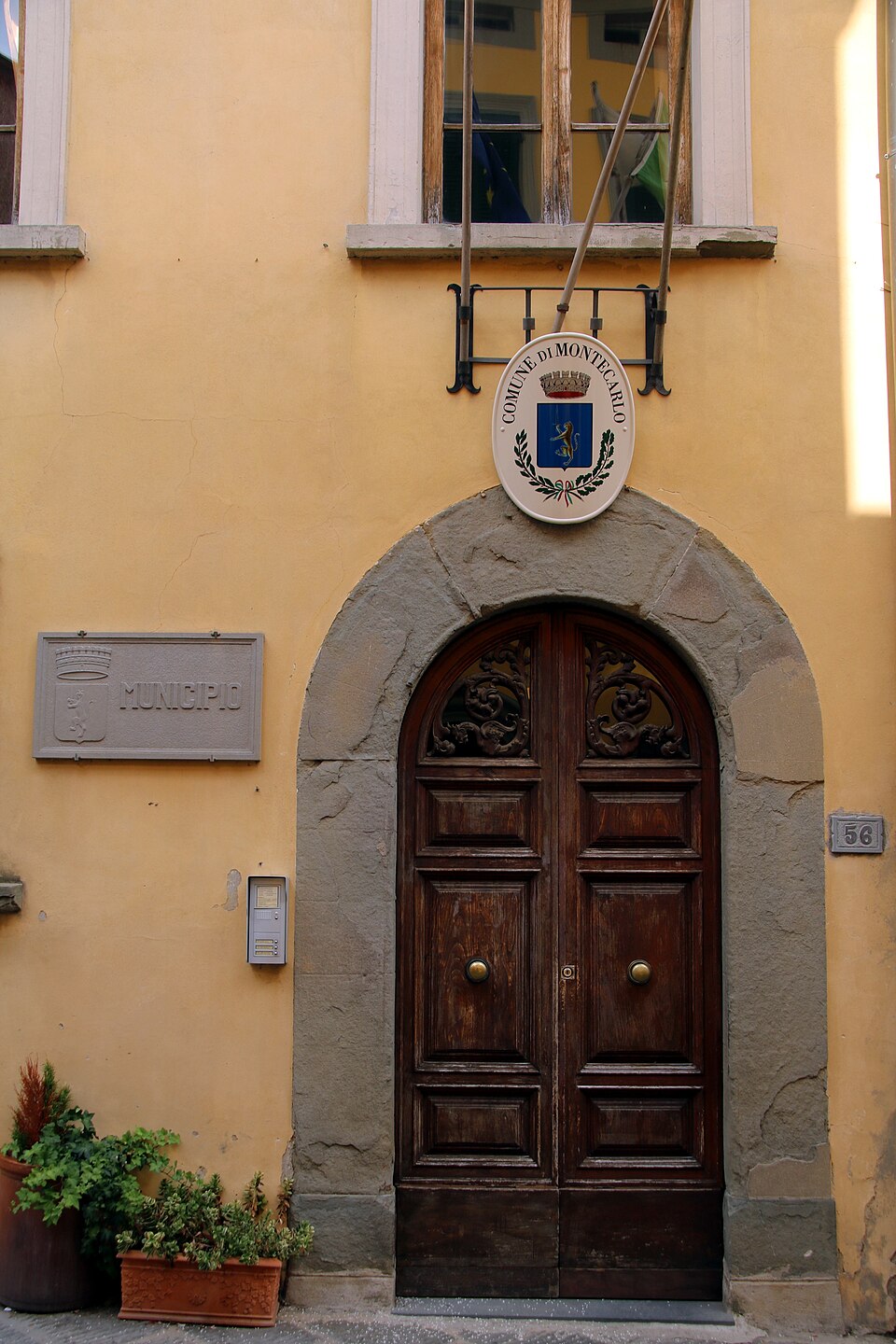

Welcome to Montecarlo. Around here we introduce ourselves the way an innkeeper would from the doorway, because that is exactly what we are: a family that has grown vines and olive trees on this hill for more than fifty years. If you are planning a trip to Tuscany and have come across the name of this small town between Lucca and the Valdinievole, this guide lines up everything worth knowing: how to get here, what to see inside the walls, how the Wine and Olive Oil Road works, when to come and where to stop for the night and a tasting. With a few tips we usually keep for friends.
Montecarlo is a walled medieval town in the province of Lucca, in Tuscany, perched on a hill 162 metres above sea level between the Lucca plain and the Valdinievole. You can see it on foot in about half a day: the heart is the Fortezza del Cerruglio, next to the tiny Teatro dei Rassicurati and the Collegiate Church of Sant’Andrea, all enclosed by almost intact 14th-century walls with three original gates. Around the town lies the area of Montecarlo DOC wine and Lucca PDO extra virgin olive oil, crossed by the Wine and Olive Oil Road of Lucca, Montecarlo and Versilia.
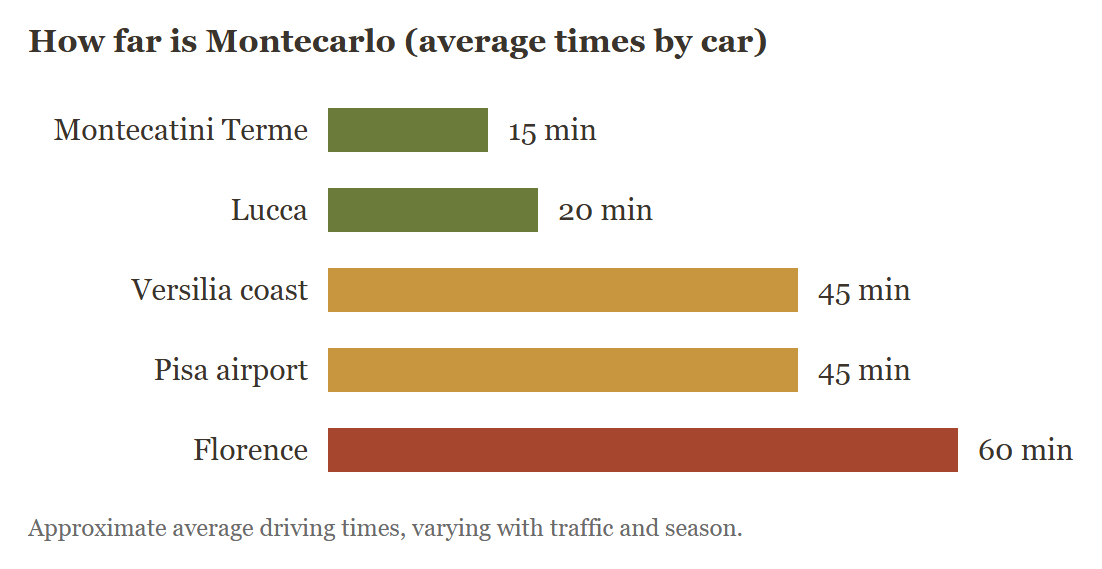
Montecarlo is one of the easiest towns to reach in the Lucca area, and that is one reason it works well as a base for exploring north-western Tuscany. It is about 18 kilometres from Lucca, roughly 20 minutes along the Via Pesciatina (SR435) or the A11 motorway. From here, Florence, Pisa, the Versilia coast and the Apuan Alps are all within an hour. To place the town on the map of the province, there is a dedicated section on our page about where Montecarlo is.
By car. From the A11 Firenze–Mare motorway the nearest exits are Chiesina Uzzanese and Altopascio; from either it is about a ten-minute drive up to the town, following the signs. The historic centre is a limited-traffic zone: you leave the car in the car parks just outside the walls, near Porta Fiorentina and the entrance to Piazza Carrara, and walk in.
By train. The reference station is Montecarlo-San Salvatore, on the regional Firenze–Lucca–Viareggio line. It sits on the plain, a few kilometres below the town: from the station you need a taxi, a lift or the local bus for the final climb. Alternatively, many visitors take the train as far as Lucca or Montecatini Terme and continue by bus or rental car.
From the airports. Pisa Galileo Galilei airport is about 40 km away (40–45 minutes); Florence-Peretola airport is a similar distance, a little over an hour allowing for city traffic. Both are well connected to the A11.
Montecarlo was founded in 1333 to gather the people of the community of Vivinaia, destroyed by the Florentines in 1331. It takes its name from Prince Charles of Bohemia — son of King John of Bohemia and future Emperor Charles IV of Luxembourg — who had come to Lucca’s aid against Florence (Comune di Montecarlo, “Storia”, accessed 6 September 2026). The town changed hands several times after that, between Lucca, Pisa and finally Florence from 1437, but its layout has stayed medieval: parallel, right-angled streets inside an almost complete ring of walls, with three 14th-century gates still standing — Porta Fiorentina, Porta a Lucca and Porta Nuova (Turismo Lucca).
In 2021 the Touring Club Italiano awarded Montecarlo the Bandiera Arancione (Orange Flag), the mark given to small inland towns that stand out for hospitality and environmental quality (Turismo Lucca). For a general picture of the town, its surroundings and its services, there is more on our page about the town of Montecarlo.
It is the symbol of the town and the first thing you see on arrival. The Fortezza del Cerruglio stands on the highest point of the hill: the oldest part dates from the early 1300s, built around a large semicircular keep, and over the centuries it took on its distinctive triangular plan. It was enlarged in the 15th century by Paolo Guinigi and completed around 1555 on the orders of Cosimo I de’ Medici, with the Piazza d’Armi bastion; it lost its military role in 1775 (Comune di Montecarlo, “Storia”). Today the fortress is used for tours and events: opening is seasonal and tied to those events, so it is worth checking the dates before going up.
Hidden inside the walls is one of the smallest historic theatres in Europe. The Teatro dei Rassicurati was set up by the academy of the same name in a building bought around 1750 and rebuilt in its present form in 1795, to a design by the Florentine engineer Antonio Capretti. The small oval hall holds at most about 200 seats, with a double tier of 22 boxes plus four proscenium boxes, and reproduces in miniature the opera houses of the 18th and 19th centuries (Visit Tuscany). Two plaques recall the poet Giuseppe Ungaretti, who defended the theatre when its demolition had been proposed, and Giacomo Puccini, who used to come here when visiting his sister in the area.
The town’s main church is the Collegiate Church of Sant’Andrea, on the central street: it keeps the 14th-century façade and doorway of the original building, while the interior was reshaped in Baroque forms in the 18th century. Inside is a 15th-century fresco of the Madonna del Soccorso, to whom the town is especially devoted (Turismo Lucca; Visit Tuscany). The picture is completed by the Church of Sant’Anna, a former convent chapel, and, just outside the walls, the Romanesque Pieve di San Piero in Campo, of 12th-century origin (Comune di Montecarlo).
The best way to understand Montecarlo is to walk its perimeter. The stretch of wall facing the countryside opens onto vineyards and olive groves as far as the hills of the Valdinievole; on clear days you can pick out the Apuan Alps. It is a short walk, fine for those travelling with children, and it always ends in one of the small squares of the centre, where you can stop for a glass of Montecarlo white.
Around the town runs the Wine and Olive Oil Road of Lucca, Montecarlo and Versilia, a wine-tourism itinerary created in 1999 under the coordination of the Province of Lucca, involving the municipalities of Lucca, Capannori, Montecarlo, Altopascio and Porcari (Comune di Montecarlo). It is not a single road but a network of farms, 17th- and 18th-century villas, parish churches and paths that links the making of wine and oil to the landscape it comes from. Along the way you can visit wineries producing Montecarlo DOC, Colline Lucchesi DOC and Lucca PDO extra virgin olive oil.
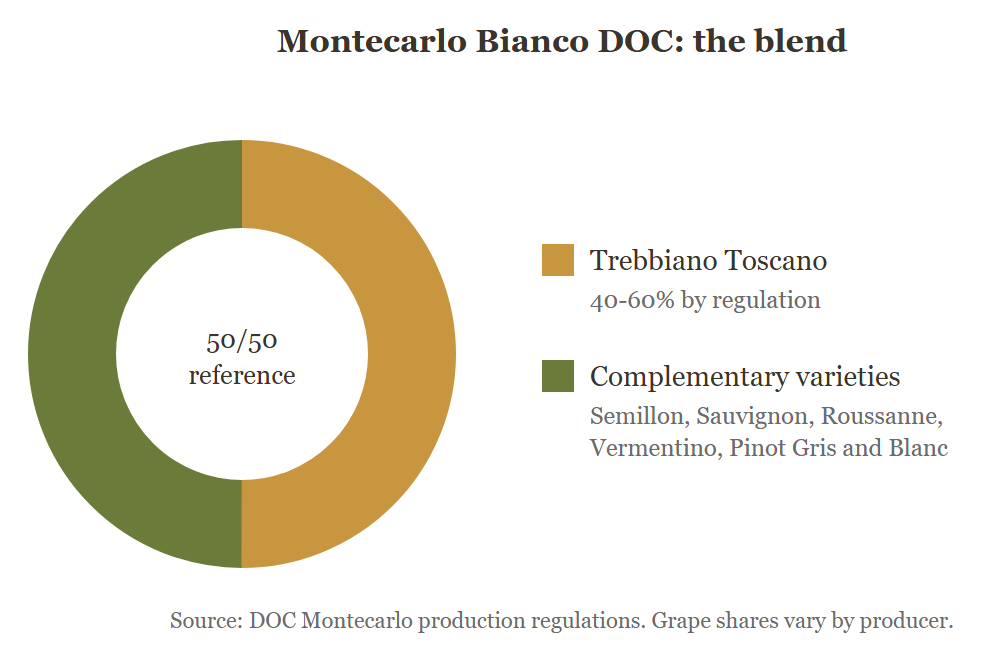
Montecarlo DOC wine. It is one of the oldest denominations in Tuscany: Montecarlo Bianco was granted DOC status in 1969, Montecarlo Rosso in 1985 (Consorzio del Vino di Montecarlo; production regulations). What sets this area apart is the blend. The white starts from Trebbiano Toscano (40–60%) but pairs it with international varieties such as Semillon, Sauvignon, Roussanne, Pinot Gris and Blanc, Vermentino; the red is Sangiovese-based (50–75%) with Canaiolo and additions of Ciliegiolo, Colorino, Syrah, Merlot and Cabernet. These “French” varieties were introduced between the 19th and 20th centuries: that is why Montecarlo has a different profile from Chianti.
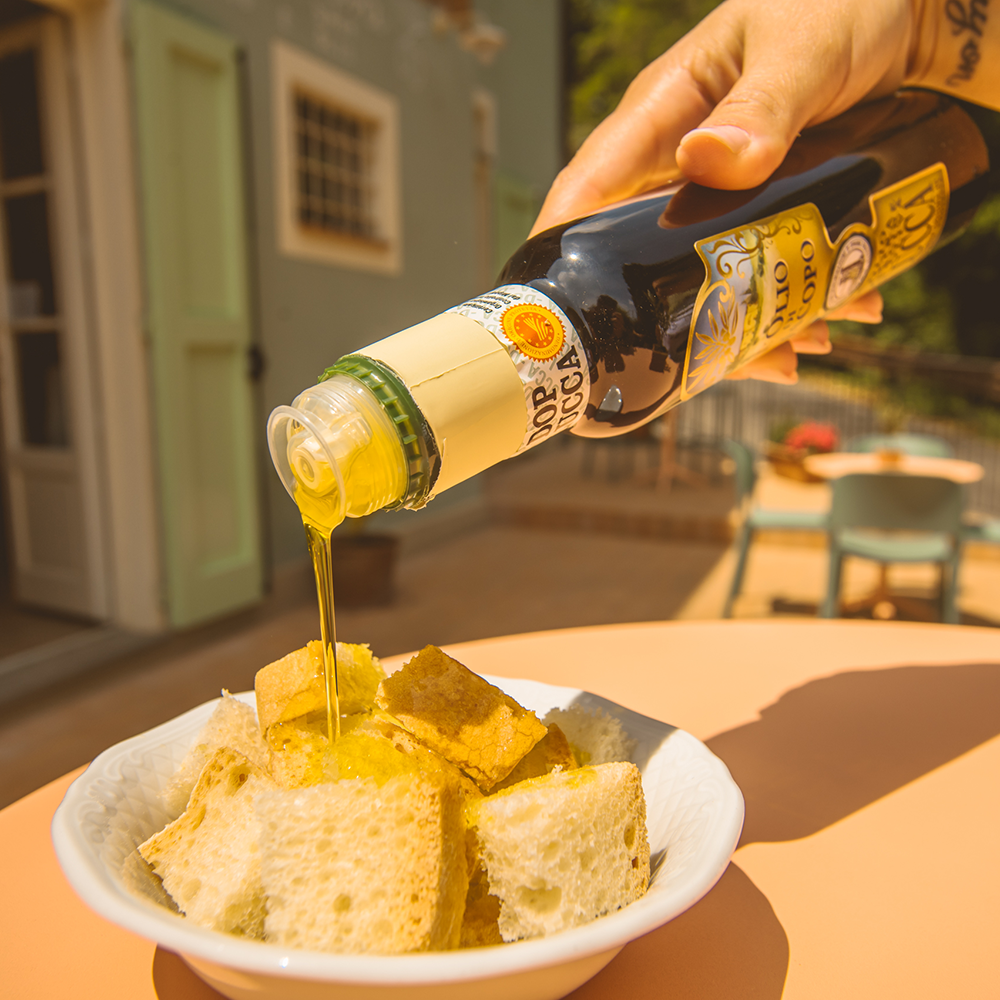
Lucca PDO olive oil. The same hills give an extra virgin olive oil with Lucca PDO status, from mainly Frantoio, Leccino and Moraiolo cultivars: grassy, with a clean bitter and peppery finish. Many local producers — ourselves included — harvest in late October and press within a few hours. A visit in autumn lets you taste the new oil straight at the mill.
If you want to arrive prepared, you can already take a look at the Montecarlo wines and oils we ship and then compare them with what you taste in person.
The Montecarlo area is dotted with historic wineries and farm stays, many run as wine resorts — tasting, lodging and dining in the same place. The institutional point of reference is the Consorzio del Vino di Montecarlo, which brings together around twenty producers and protects some 200 hectares of vineyards; its website and that of the Wine Road help you find the estates open to visitors.
Our advice, from people who live here: always book ahead, especially at weekends and in September, and count on comfortable shoes for the vineyard. If you would like an experience built around you, you can book a tasting of DOC wine and PDO olive oil with us: we run it in small groups, among our vines, and it can be paired with a stay in a farmhouse among the vineyards.
The most characterful time to visit Montecarlo is early September, when the town hosts the Montecarlo Wine Festival (Festa del Vino di Montecarlo). It is one of the oldest wine festivals in Italy: the first edition was in 1968 and 2026 marks the 58th, running from 28 August to 8 September (Camera di Commercio Toscana Nord-Ovest). For about ten days the squares — Piazza d’Armi, Piazza Garibaldi, Piazza Carrara, Via Roma — fill with tasting stands, masterclasses with the producers (“Live di Vini”), the procession of the Historical Group, the G. Puccini Philharmonic and, on the final evening, the procession dedicated to the Madonna del Soccorso. Admission is free.
Here is how the town changes through the rest of the year:
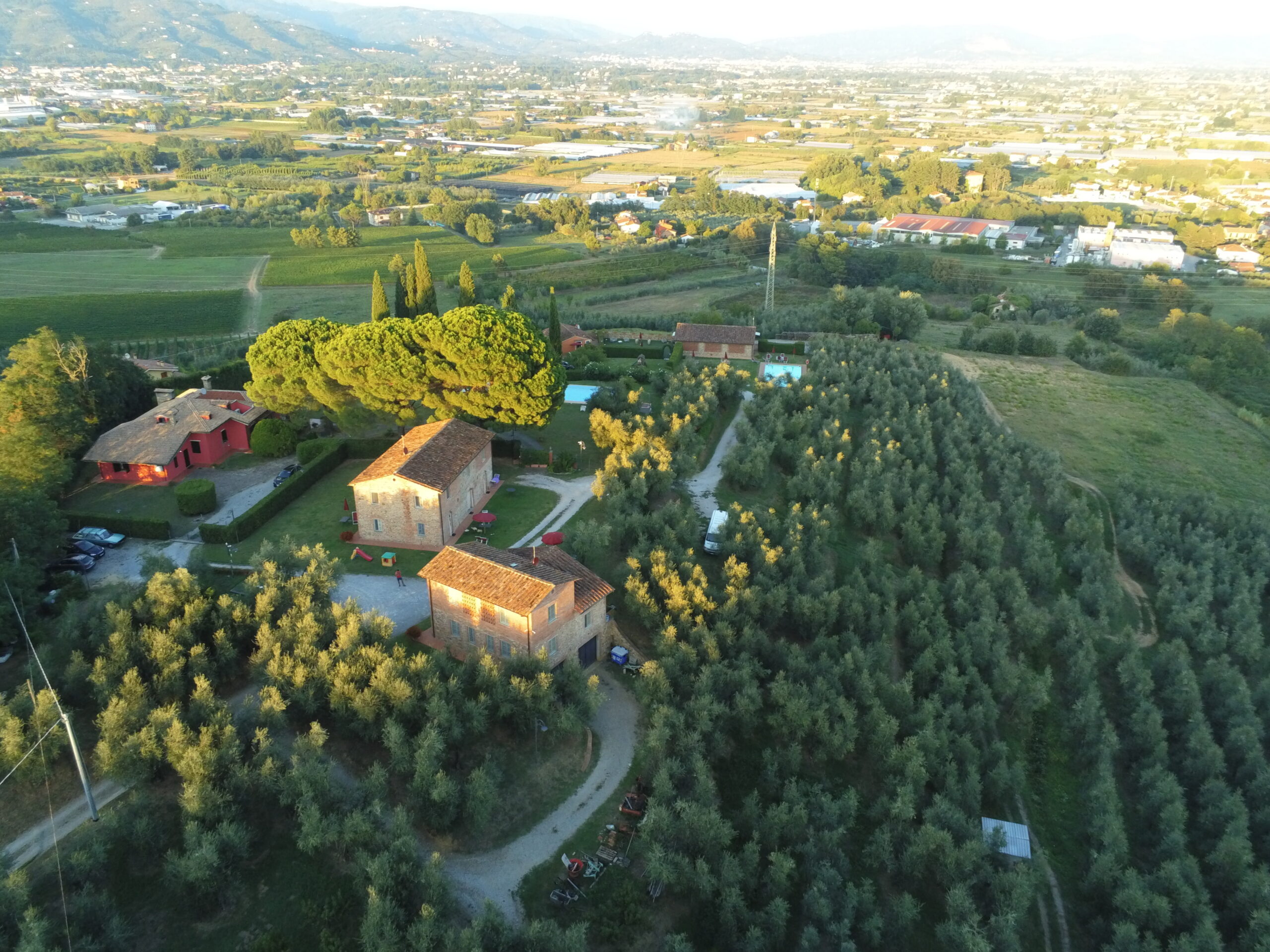
You can sleep in the town, in small inns and houses within the walls, or in the countryside, at one of the farm stays among the vineyards and olive groves that surround it. The second option is the one we suggest for those coming for the wine and oil: you are in the quiet, you step out among the rows in the morning and you are still a few minutes’ walk from the stones of Montecarlo.
From this base you can reach Lucca, Pisa, Florence, Pistoia, the Versilia coast and the spa town of Montecatini in a day: Montecarlo works well as a base camp for north-western Tuscany, away from the crush of the busier destinations but within reach of all of them.
That is what we offer at Principato di Toscana, in Via San Piero in Montecarlo: holiday homes in a farmhouse among our vineyards and a guided tasting of Montecarlo DOC wine and Lucca PDO extra virgin olive oil, to pair with your stay. If you want help planning your visit, write to us: we will help you line up days, times and bookings, as we would for a friend on the way.
Montecarlo is the right town if you are looking for a real Tuscany on a human scale: 14th-century walls, a miniature theatre, a fortress you can see for miles and, all around, one of the oldest wine areas in the region. Come in early September for the Wine Festival, or in autumn for the harvest and the new oil; stay at least one night so you have time for a tasting done at a relaxed pace.
Once you have settled on dates, take a look at where Montecarlo is and how to get around and at our holiday homes among the vineyards: we will sort out the rest together.
Half a day is enough for the town itself: you can walk the historic centre in about an hour, plus the Fortezza del Cerruglio and a stop. If you also want to visit one or two wineries with a tasting, allow a full day or an overnight stay.
Yes. The fortress is open to the public for tours and events, but with seasonal opening tied to the town’s events. Check days and times in advance with the Comune di Montecarlo or the tourist office before going up.
In early September. In 2026 it is the 58th edition, from 28 August to 8 September, with tasting stands, masterclasses, a historical procession and music in the town squares. Admission is free. It is the first wine event on Montecarlo’s calendar and one of the oldest in Italy (first held in 1968).
By train, get off at Montecarlo-San Salvatore (Firenze–Lucca–Viareggio line), on the plain below the town, then take a taxi or local bus for the final climb. Alternatively, take the train to Lucca or Montecatini Terme and continue by bus or rental car. From Pisa and Florence airports the most practical option is a car.
The signature products are Montecarlo DOC wine — white (Trebbiano with Semillon, Sauvignon, Roussanne, Vermentino) and red (Sangiovese-based) — and Lucca PDO extra virgin olive oil. On the table you will find Lucca and Valdinievole cooking: bread-and-vegetable soup, tordelli pasta, meats, and cakes to pair with sweet passito wine.
Yes. It is a small, pedestrian, quiet town, with an easy, panoramic walk along the walls. A few kilometres away, towards Capannori, stands the Quercia delle Streghe (Witches’ Oak), a roughly 600-year-old monumental oak linked to the legends of Pinocchio — a classic outing with children.
Vuoi rivivere l’emozione delle colline di Montecarlo?
Trova nel nostro shop i sapori autentici della tradizione contadina, pronti per essere spediti direttamente a casa tua.